
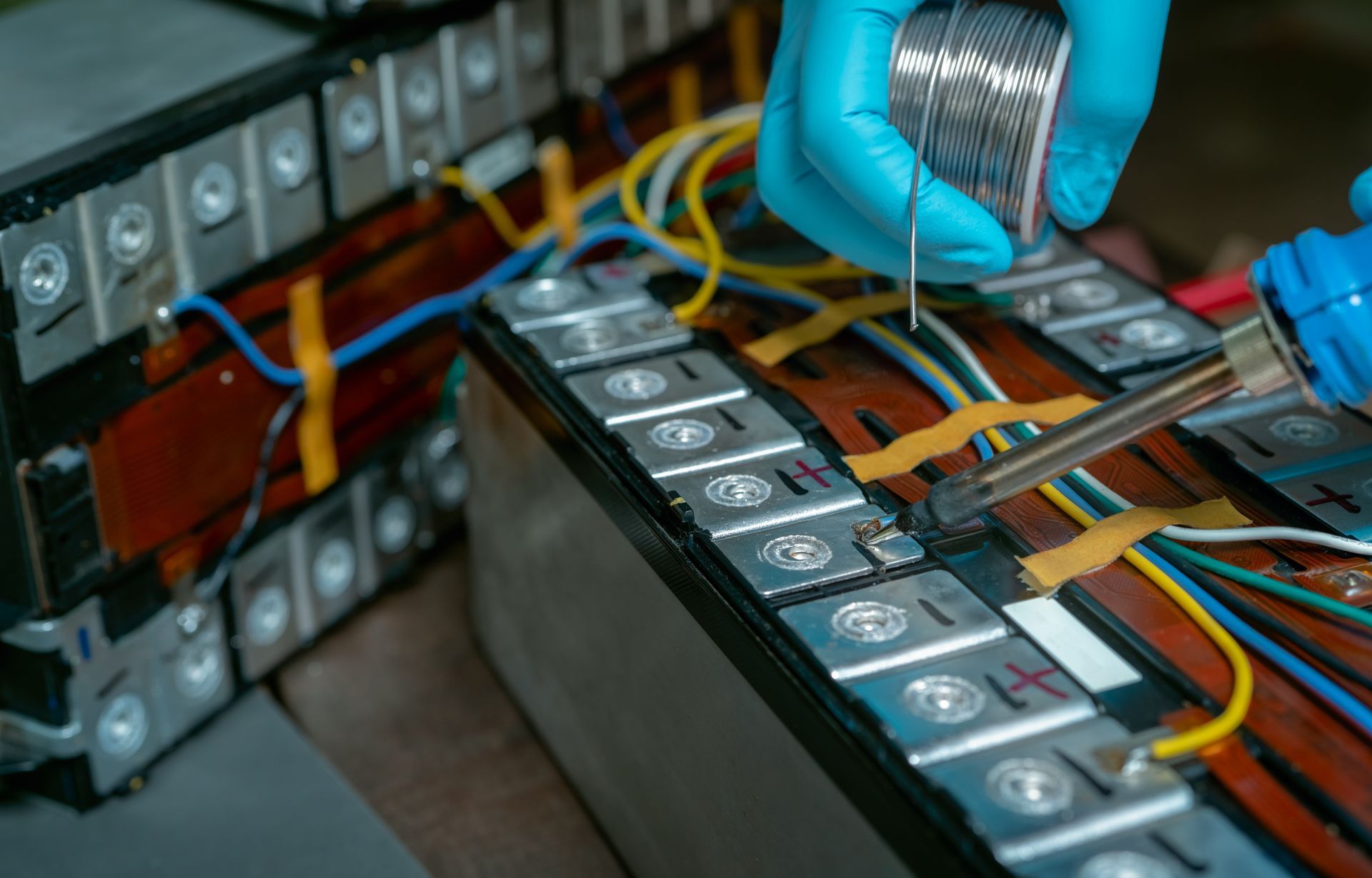
Diagnosing Battery Issues Before Replacement Costs Hit
Battery Storage Troubleshooting in Sandy for homeowners seeing capacity warnings or performance drops in home battery systems
Battery storage systems in Murray and Sandy frequently trigger premature capacity warnings due to the Salt Lake Valley's freeze-thaw temperature swings, which reduce state-of-health faster than manufacturers' rated cycle counts suggest. When your home battery displays error codes, reduced backup duration, or fails to hold a full charge, the immediate assumption is often that the battery has reached end-of-life and requires full replacement. Utah Solar Detach & Reset runs state-of-health diagnostics before recommending any replacement work, because many batteries flagged as failed are actually reconfigurable or suffering from communication errors rather than true capacity loss. The diagnostic process identifies whether the issue is hardware degradation, software misconfiguration, or thermal management problems that can be corrected without replacing the entire unit.
The troubleshooting process begins with battery management system data extraction and cell voltage testing. Individual cell performance is measured to determine whether degradation is uniform across the battery pack or isolated to specific cells. Temperature cycling effects are evaluated based on installation location and seasonal exposure. This diagnostic-first approach saves homeowners from unnecessary replacement expenses by separating actual failures from correctable performance issues.
Schedule a state-of-health diagnostic if your battery storage system is showing capacity warnings or reduced backup performance.
What Changes After Honest Diagnostics
Battery diagnostics reveal whether performance issues stem from cell degradation, system configuration errors, or environmental factors affecting charge cycles. Testing equipment measures actual usable capacity compared to rated specifications, and the battery management system logs are analyzed for fault codes and thermal events. If the battery is genuinely degraded beyond useful service, replacement is recommended with supporting data. If diagnostics show that the battery is still within acceptable health parameters but misconfigured, settings are adjusted to restore expected performance.
After diagnostics and any necessary reconfiguration, your battery resumes normal charge and discharge cycles without the false capacity warnings that originally triggered concern. Backup duration returns to expected levels based on actual state-of-health, and you avoid the expense of replacing a battery that still has serviceable life remaining. Honest evaluation prevents homeowners from spending thousands on replacements driven by software errors rather than actual hardware failure.
Diagnostics do not include battery cell replacement or internal repairs, which are typically not cost-effective compared to full unit replacement when cells are genuinely degraded. The service focuses on determining whether replacement is actually necessary or whether the system can be restored to useful operation through reconfiguration.
Answers to Frequent Battery Troubleshooting Questions
Homeowners in the Salt Lake Valley dealing with battery performance issues want to understand what diagnostics involve and whether replacement is truly necessary.
How do I know if my battery needs replacement or just troubleshooting?
State-of-health diagnostics measure actual capacity versus rated capacity and identify whether performance issues are caused by cell degradation or system configuration problems that can be corrected without replacing the battery.
Why do batteries in Sandy and Murray show capacity warnings faster than the manufacturer's rated cycles suggest?
Freeze-thaw temperature swings accelerate capacity loss compared to stable climates, and installation locations with poor thermal management compound the issue by exposing batteries to wider temperature ranges than they're designed to handle.
Can troubleshooting restore my battery to its original capacity?
Troubleshooting can restore performance to the battery's current state-of-health by correcting configuration errors, but it cannot reverse actual cell degradation that has already occurred due to cycling or temperature exposure.
What happens if diagnostics show the battery is genuinely failed and needs replacement?
You receive a detailed report showing actual capacity measurements and cell voltage data that supports the replacement recommendation, which provides transparency rather than a replacement quote without supporting evidence.
Will the battery manufacturer cover diagnostics and troubleshooting under warranty?
Warranty coverage depends on the manufacturer and the specific failure mode, but third-party diagnostics provide documentation that can support warranty claims if the battery is found to be defective rather than degraded through normal use.
Utah Solar Detach & Reset provides honest battery diagnostics for Wasatch Front homeowners who need to know whether replacement is actually necessary. Book a diagnostic session to evaluate your system's state-of-health before committing to replacement costs.